
How a small business controls its stock
The count, the record, and the reorder point use your store's own numbers.
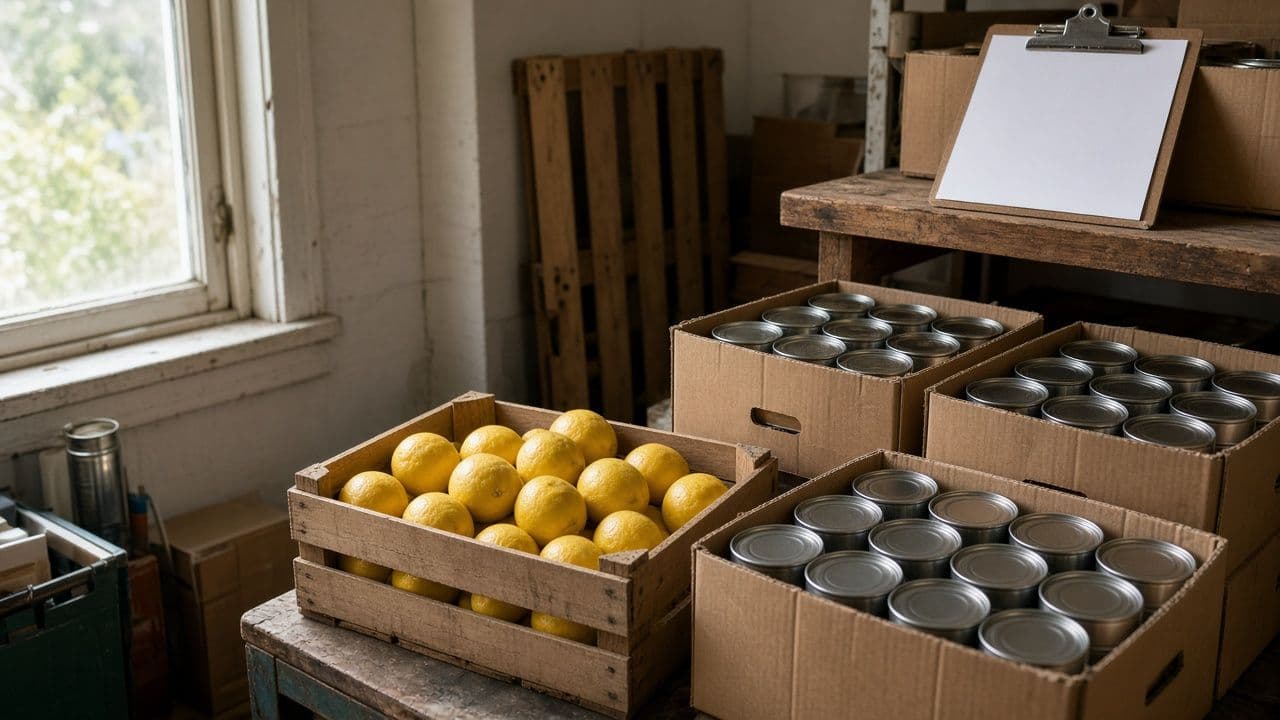
Stock control produces three numbers before the next order: what is in the store, what left, and the quantity that says it is time to buy. Without those three, this week's order repeats last week's.
In the 24 April 2025 release of the 25th operational-efficiency survey from the , neighborhood stores came in at 3.03% inefficiency. That percentage describes the retailers who answered. It does not describe your shelf. It is a Brazilian food-retail figure, not a target for a shop in another country. The piece on seven stock errors walks through what a count often reveals. This one is the routine that produces the count.
Count what is in the store
A 17 December 2024 note from the Sebrae news agency in Tocantins, Brazil, treats a physical inventory as the start of control: the count has to match the record. Count units on the sales floor and in the back room on the same day.
If the book says 18 and you find 11, the difference of 7 is the number that enters the decision. The record alone is not the store.
Record what comes in and what goes out
Every delivery and every sale gets a date, a quantity, and a cost. The same Sebrae note names a spreadsheet and a daily notebook as enough to start. What was not written does not belong on the next order.
The cost of the unit that arrived is the cost the price account will use later. Without it, the shelf can turn and the profit can stay unknown.
The older lot leaves first
means the lot that arrived earlier is the lot that leaves first. The Sebrae note describes the method for food and cosmetics and says it also fits other goods.
The label carries the date through which the item can still be sold. Without that date, the new lot hides the old one, and the loss shows up only when someone opens the case.
The point where the order returns
The Sebrae note calls the reorder point the minimum quantity that says it is time to buy. The account uses your sales and your supplier's lead time. The example below is arithmetic, not a sector average.
Sixty units left in 30 days: two a day. Delivery takes 10 days. The minimum is 20. Near 20, the item goes on the order. If what is already in the store covers more days than the delivery, that line waits.
- Count the sales floor and the back room on the same day and write down the gap against the record.
- Enter quantity and cost on the day the item arrives and on the day it leaves.
- Put the earlier lot in front and mark the last day it can be sold.
- Buy when the count reaches the minimum you calculated from your sales and the supplier's lead time.
Those four tests use your store. The 3.03% from the is what the survey measured in Brazilian neighborhood stores. It is not the target for your stock.
Frequently asked questions
How often should I count?
The Sebrae note in Tocantins talks about counting from time to time. It does not set one calendar for every shop. The gap has to fit what you can check before the next order. If you order weekly, the fast items get a weekly count.
Is the 3.03% from the my loss?
No. It is the inefficiency of neighborhood stores in the 24 April 2025 release, and it describes Brazilian food retail. Your gap is what you counted minus what the record said.
Do I need software to start?
No. The Sebrae note names a spreadsheet and a notebook. Software helps only if someone enters receipts, sales, and the count in it.
Sources and references
Related articles

Seven inventory mistakes that drain a grocery store
In August 2025 the National Retail Federation explained why it stopped publishing one national shrink rate. The percentage mixes theft, spoilage, and bookkeeping.

How to plan a stock purchase
Buy what the count does not cover until the next delivery. A sector stockout index is not the share of your sales.

How to record losses in a small business
Separate breakage, expiry, and the gap from the count. A food-retail survey measures the sector. Your loss is what you wrote down.